
Across markets, schools and streets, a two-day Zero Stigma Campaign reached nearly 6,000 people, expanded HIV testing and renewed a citywide call to end discrimination against people living with HIV.
By Bunmi Yekini
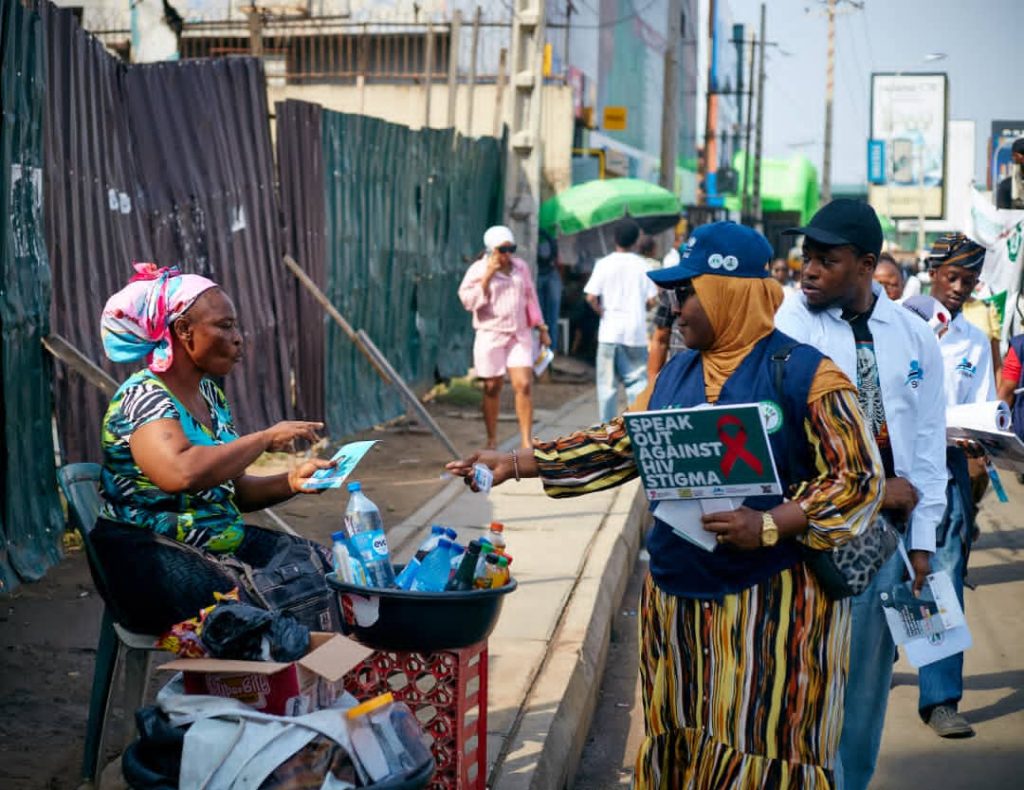
The stretch of road between the Ikeja Local Government Secretariat and Ipodo Market is normally defined by traffic, trade and routine. Over two days, it became an open-air platform for public health, drawing residents into conversations about HIV, offering on-the-spot testing, and putting numbers to a problem that is often discussed in hushed tones. By the end of the Zero Stigma Campaign, nearly 6,000 people had been reached, 338 had taken an HIV test, and 10 positive cases had been identified and linked to care, underscoring how community-based engagement can translate awareness into measurable action.
The two-day campaign, implemented in Ikeja Local Government Area by the Government of Nigeria through the National Agency for the Control of AIDS (NACA), was carried out in collaboration with GEDRITE Nigeria Limited, the Lagos State AIDS Control Agency (LSACA) and the Improved Sexual Health and Rights Advocacy Initiative (ISHRAI). It combined advocacy, stakeholder engagement, community mobilisation, sensitisation and integrated HIV testing in one coordinated effort aimed at tackling stigma while expanding access to services.
Turning public spaces into points of care
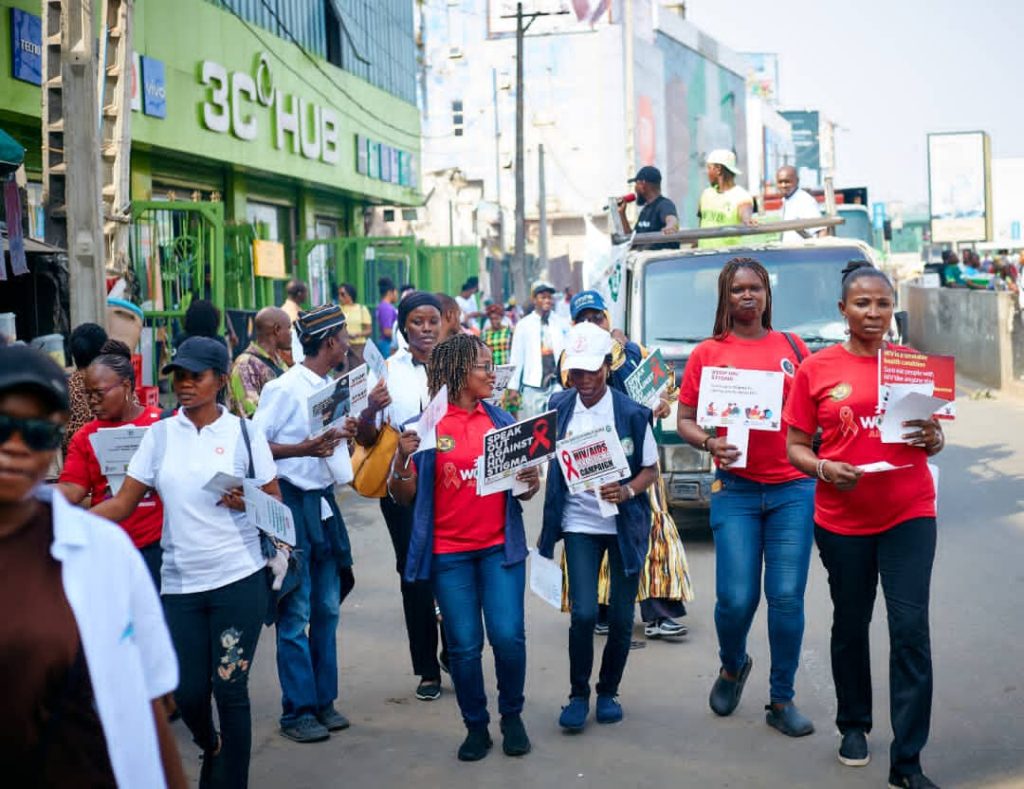
The campaign opened with a high-visibility rally from the Ikeja LGA Secretariat to Ipodo Market. The procession drew market traders, commuters and passersby into conversations about HIV, stigma and discrimination against people living with the virus. Volunteers distributed 5,000 information, education and communication (IEC) materials carrying zero-stigma messages. Using a conservative estimate of one person reached per material, IEC distribution alone directly engaged 5,000 individuals, excluding secondary exposure.
Beyond the spectacle, organisers said the rally was designed to lower barriers. “We wanted to meet people where they already are,” a senior officer at LSACA said. “When you bring the message to the street and combine it with services, people respond.”
Across all service delivery points, 338 individuals accessed HIV testing services during the campaign.
At the Ikeja Secretariat, 94 people were tested on Day One, 56 males (59.6%) and 38 females (40.4%), with three positive cases (3.2%) identified. Two of the clients were newly referred to the HALG facility for linkage to care, while one was already on treatment. On Day Two at the same location, 89 people were tested, including 57 males (64.0%) and 32 females (36.0%), resulting in two positive cases (2.2%), with referrals made for continued care.
Market-based outreach further expanded access. On Day One at Ipodo Market, 81 individuals, 41 males (50.6%) and 40 females (49.4%), were tested, yielding three positive cases (3.7%). On Day Two, 74 people were tested, including 32 males (43.2%) and 42 females (56.8%), with two positive cases (2.7%) identified. Organisers noted improved female participation following enhanced mobilisation strategies such as music-supported outreach and shop-to-shop engagement. In total, 10 HIV-positive individuals were identified during the two days, all of whom were either already on treatment or successfully linked to care.
Securing buy-in beyond the outreach
Alongside mass mobilisation, the campaign prioritised structured engagement with community gatekeepers. An inception meeting and a stakeholders’ town hall brought together traditional and religious leaders, market leadership, transport unions, civil society organisations and key population networks. The official flag-off ceremony attracted 57 participants, 61.4% male and 38.6% female, while 37 participants attended the town hall meeting, with near gender parity.
According to LSACA, the aim was to move stigma reduction from messaging to accountability. “These engagements help strengthen coordination and reinforce institutional commitment to rights-based responses within Ikeja LGA,” the senior officer said.
He added that Lagos State currently has an estimated 160,000 people living with HIV, with over 145,000 on antiretroviral therapy, highlighting both progress and the continuing need for community trust to sustain testing and treatment uptake.
Law, prevention and emerging realities
The campaign also drew attention to policy gaps. The LSACA official confirmed that the law protecting people living with HIV, last enacted in 2007, is under review.
“This is 2026,” she said. “There are emerging issues we need to address. We are consulting widely to ensure the revised law better safeguards people living with HIV.”
On prevention, he explained that while no vaccine is currently available, PrEP (pre-exposure prophylaxis) and PEP (post-exposure prophylaxis) remain key interventions. PrEP is currently prioritised for pregnant women at risk of exposure, while PEP is administered after potential exposure, including cases of sexual assault or occupational injuries.
Classrooms as early intervention spaces
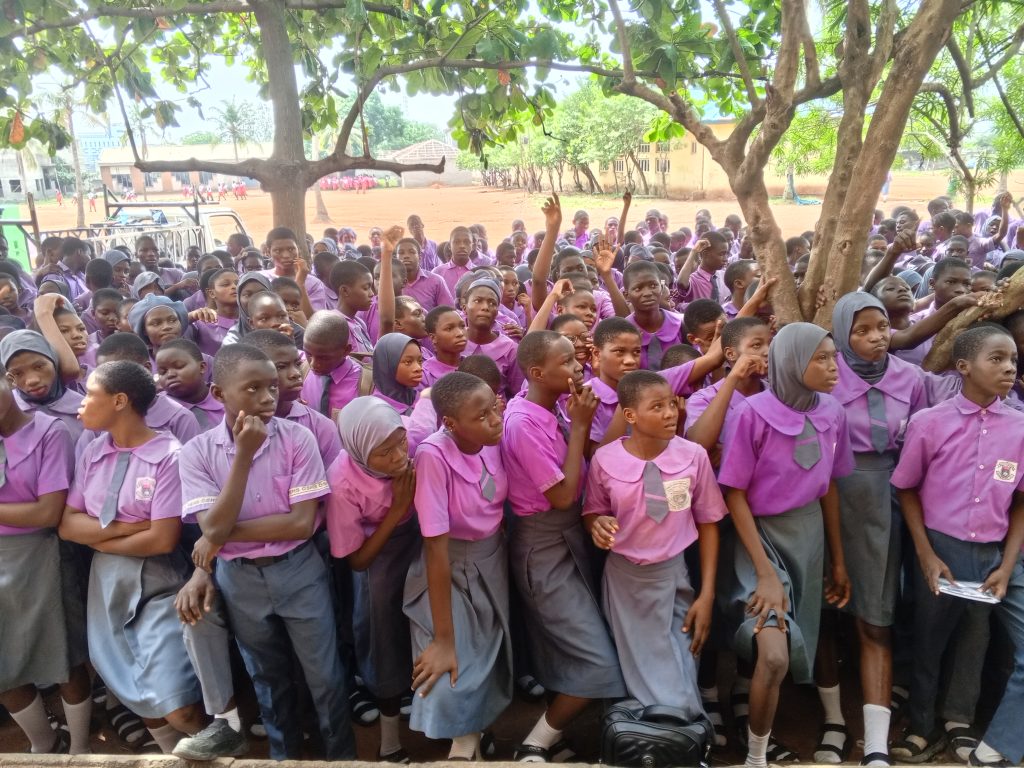

The education sector formed a critical pillar of the campaign. Across two public secondary schools in Ikeja LGA, 352 students and teachers were reached through school-based sensitisation.
At Oregun Senior High School, 250 students and 14 teachers were engaged on HIV transmission, prevention and non-stigmatising attitudes. At Oke-Ira Senior Grammar School, 102 students and seven teachers received similar sensitisation.
The Acting Vice Principal of Oregun Senior High School, Mrs. Aderonke Iyabo Arisoyin, described the intervention as timely. “This programme is highly impactful,” she said. “Our students need continuous education on how to protect themselves and avoid diseases like HIV. We hope it continues, with more notice so it can be even more effective.”
Students said the sessions changed how they viewed people living with HIV. “I learned that we should love and support them, not push them away,” said Ganiyu Rukayat, a student at the school. Another student, Bolarinde Zainab, said kindness and care were essential. “If we stay close and are kind, they won’t feel alone.”
For Oludipe Olubiyi, the Executive Director of ISHRAI, the responsibility of achieving a zero stigma is a shared one: “We hear directly from people living with HIV about the discrimination they face,” he said. “If we do nothing, stigma can lead to isolation, and sometimes even death. That’s why this awareness is critical.”
By the end of the two days, the campaign had directly reached an estimated 5,784 people through rallies, meetings, school sensitisation and IEC distribution.