
Community educators and health workers say stigma, parental resistance and gaps in community access are limiting efforts to improve reproductive health knowledge, protect young girls and prevent unintended pregnancies.
By Bunmi Yekini
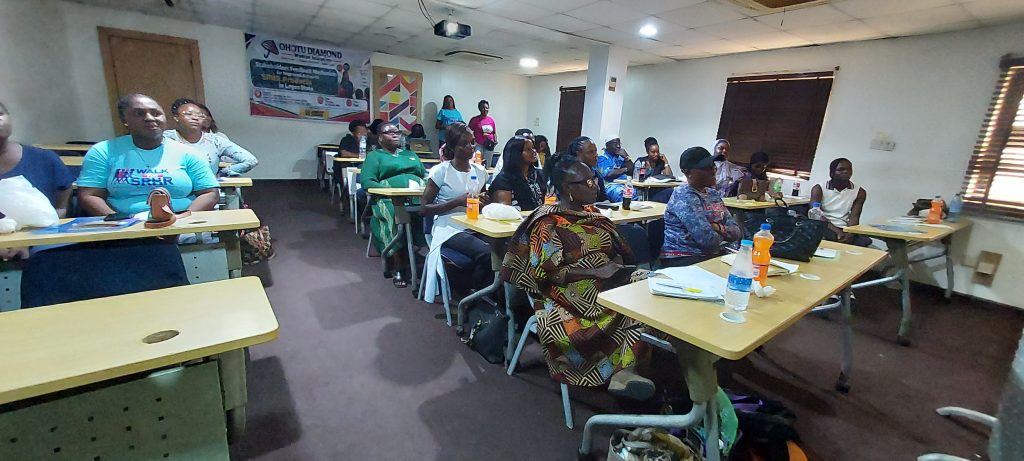
Women and adolescent girls in two Lagos communities continue to face barriers to reproductive healthcare, including stigma surrounding family planning, limited access to accurate information and reluctance among some parents to discuss sexual health with their children, community educators and health workers say.
A two-year project by the Ohotu Diamond Women Initiative (ODWI), which promotes reproductive rights and access to healthcare, has trained 120 community ambassadors and reached women and young people in Agege and Ifako-Ijaiye local government areas, equipping them with information on family planning, HIV, sexually transmitted infections and gender-based violence.
But experiences shared at a stakeholders’ review meeting highlight the gap between providing health information and ensuring that women and girls can make informed decisions about their health without fear, discrimination or family pressure.
“When we started this project, we said it was just with female sex workers. But we discovered that sex workers are not just in the brothels,” said Dr Margaret Onah-Nnang, the project’s coordinator, explaining why the initiative expanded its outreach to surrounding communities.
The programme initially covered 20 locations, split equally between the two local government areas, before expanding to 40. It has trained 120 ambassadors, most of them women from vulnerable backgrounds, alongside some community members.
In Agege, the initiative has worked in about 13 communities, including Orile-Agege. Its expansion in Ifako-Ijaiye has been slower because of difficulties securing access through Community Development Associations, which play a role in facilitating engagement with residents.
Onah-Nnang said the review meeting was intended to establish what had worked, identify shortcomings and gather feedback from the people delivering the programme on the ground.
One recurring obstacle is the stigma attached to family planning, even among women who may benefit from the services.
During a community outreach exercise, Onah-Nnang recalled, a woman expressed discomfort about her friends knowing that she used family planning.
The experience reinforced the need to make reproductive health discussions more acceptable and accessible, she said, adding that women needed information to make decisions about child spacing and their health.
The challenges extend to adolescents, some of whom have limited opportunities to discuss sexual health openly with their parents.
Olisega Anita, an ODWI community ambassador, said young people she engaged with were familiar with some contraceptive methods but still needed reliable explanations about reproductive health, HIV and sexually transmitted infections.
She said some parents were reluctant to believe that their adolescent children knew about condoms, making it difficult to initiate conversations that could help them understand sexual health and make informed choices.
The issue has wider implications for adolescent health, particularly when young people lack trusted adults with whom they can discuss relationships, pregnancy prevention and access to healthcare.
Unintended pregnancy, Interrupted education
For some young women, the consequences of inadequate information and support extend beyond health.
Moshood Saidat, a 21-year-old community ambassador from Agege, said an unintended pregnancy had disrupted her education after her father declined to sponsor her further studies.
She gave birth in 2023 and was later introduced to ODWI, where she received information about family planning. She is now learning makeup as a vocational skill and said the knowledge she gained had helped her avoid another pregnancy while she works towards becoming financially independent.
“If I didn’t know that at that right time, I could have been carrying the second pregnancy or third one,” she said.
Saidat said she wanted parents to communicate more openly with their children about reproductive health instead of relying on explanations that could leave adolescents confused about pregnancy prevention and sexually transmitted infections.
She also described helping a 19-year-old friend experiencing violence from her boyfriend. After Saidat encouraged her to report the abuse to the police, the friend took that step, she said.
The experience illustrates how community-based education can extend beyond reproductive health to help young people recognise abuse and seek support.
Health services and the need for privacy
Health workers say access to confidential counselling and a range of contraceptive options is also important in ensuring that adolescents and women receive appropriate care.
Mrs Comfort Otokiti, a family planning manager in Agege, said adolescents visit health facilities for counselling and contraception, while some girls aged between 13 and 18 require maternal care.
She said the facility provides privacy and counselling to help clients understand available family planning methods, including condoms, pills, injectables, implants and intrauterine devices.
Otokiti added that some young mothers face rejection or blame from their families after becoming pregnant. Health workers sometimes have to counsel parents as well as the girls to encourage family support and help the young mothers consider their future education and welfare.
The accounts underscore the importance of healthcare that respects patients’ dignity and protects them from judgement, particularly when they are young or socially vulnerable.
ODWI says its programme has sought to build trust by training ambassadors who can share information within their own communities rather than relying solely on outside organisations.
Onah-Nnang said she was encouraged by the ambassadors’ growing confidence and their ability to take ownership of the work, despite initial concerns about the difficulties they might encounter in the communities.
However, the programme’s experience in Ifako-Ijaiye shows that community access cannot be taken for granted. The initiative plans to strengthen engagement with local community associations to reach more women and adolescents.
For the organisers, the next challenge is to ensure that increased awareness translates into sustained access to services and the freedom to seek care without embarrassment or discrimination.
The project review, Onah-Nnang said, should go beyond documenting activities to identifying gaps, strengthening partnerships and agreeing on practical steps to sustain the work.
The broader equity concern is whether women and adolescents, regardless of their age or social circumstances, can obtain accurate reproductive health information, confidential counselling and appropriate care when they need it.