
Calls grow for stigma-free health services and legal reforms as activists, officials meet in Lagos
By Bunmi Yekini
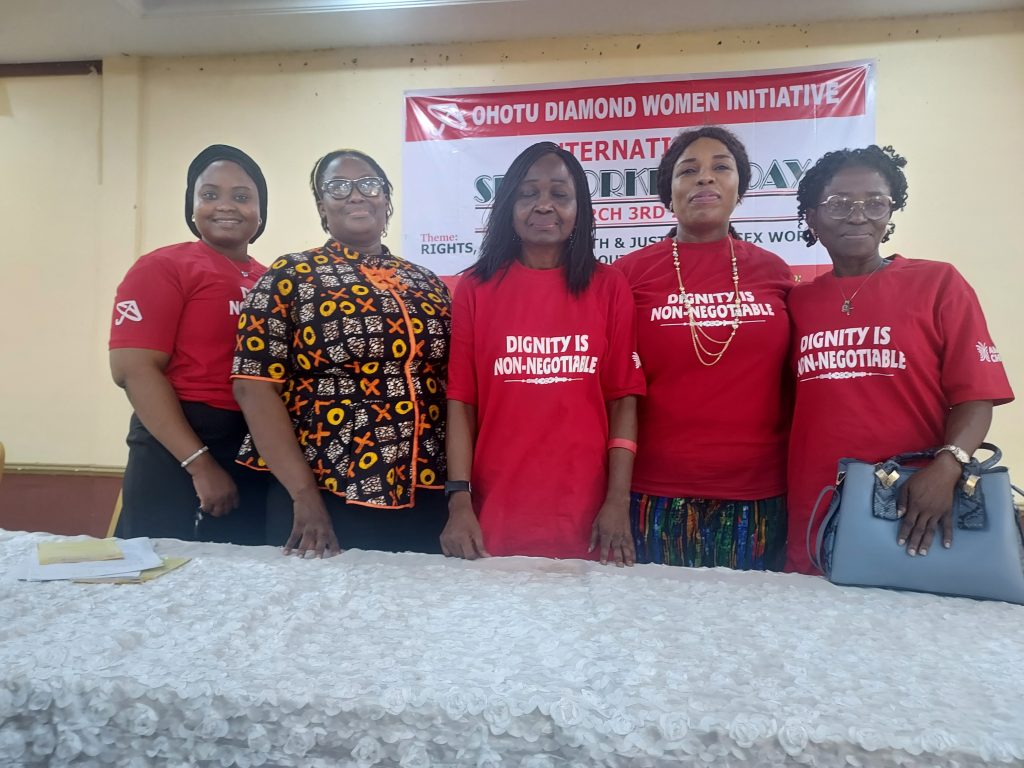
Activists, government officials and civil society groups gathered in Lagos to mark International Sex Workers’ Day with renewed calls for improved healthcare access, stronger legal protections and reduced stigma for women engaged in sex work across Nigeria.
The event, organised by the Ohotu Diamond Women Initiative, brought together representatives from the Lagos State ministries of health and justice, the police, legal experts and rights advocates to discuss the realities faced by female sex workers and possible policy responses. Speakers said the day was not only symbolic but also a platform to highlight the barriers sex workers encounter in accessing healthcare, justice and social protection.
“Today, we are not just marking a date. We are amplifying voices. We are demanding dignity,” said Dr. Margaret Onah Nnang, project coordinator at the Ohotu Diamond Women Initiative, while presenting a community advocacy project focused on reproductive rights.
The project, titled “Advocating for Reproductive Rights: Ensuring Access to Healthcare and Choice,” was developed after consultations with female sex workers in Lagos communities, including Agege and Ifako-Ijaiye. According to Nnang, the research revealed widespread stigma in healthcare facilities, fear of reporting violence and gaps in awareness about sexual and reproductive health rights.
“We found women who are strong and resilient, yet they face daily stigma in health facilities. Many fear reporting violence because of harassment or discrimination,” she said.
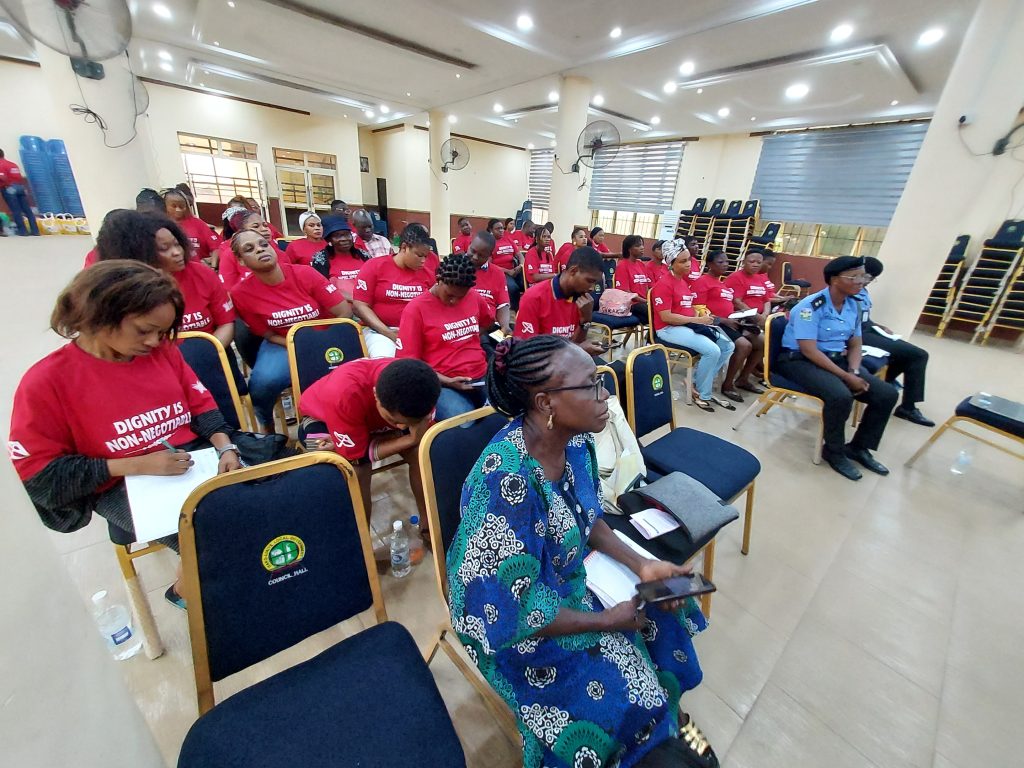
The initiative focuses on three main areas: community empowerment, stakeholder engagement and policy advocacy. Peer educators drawn from sex worker communities have been trained to lead awareness sessions in brothels and other locations, providing information about health services, legal rights and reporting pathways for abuse.
Organisers also convened meetings involving health providers, lawyers, police officers and civil society groups aimed at improving dialogue and building trust between institutions and sex worker communities.
Calls for dignity and inclusion
At the event, Imabong Abraham, executive director of the Ohotu Diamond Women Initiative, said International Sex Workers’ Day serves as a reminder that sex workers should not be excluded from conversations about public health and gender equality.
“As a sex worker and as the executive director of this organisation, I stand before you with pride — pride in our resilience and in the progress we continue to make despite stigma and systemic barriers,” she said.
Abraham called for an end to discrimination and for sex workers to be included in policymaking processes affecting their lives.
“We cannot speak about public health without including sex workers. We cannot speak about gender justice while excluding sex workers,” she said.
Advocates at the gathering said improving access to healthcare for sex workers was not only a matter of individual rights but also a public health concern.
“Sex workers are mothers, daughters and caregivers. Their health affects public health. Their safety strengthens community safety,” Nnang said.
Legal and policy challenges
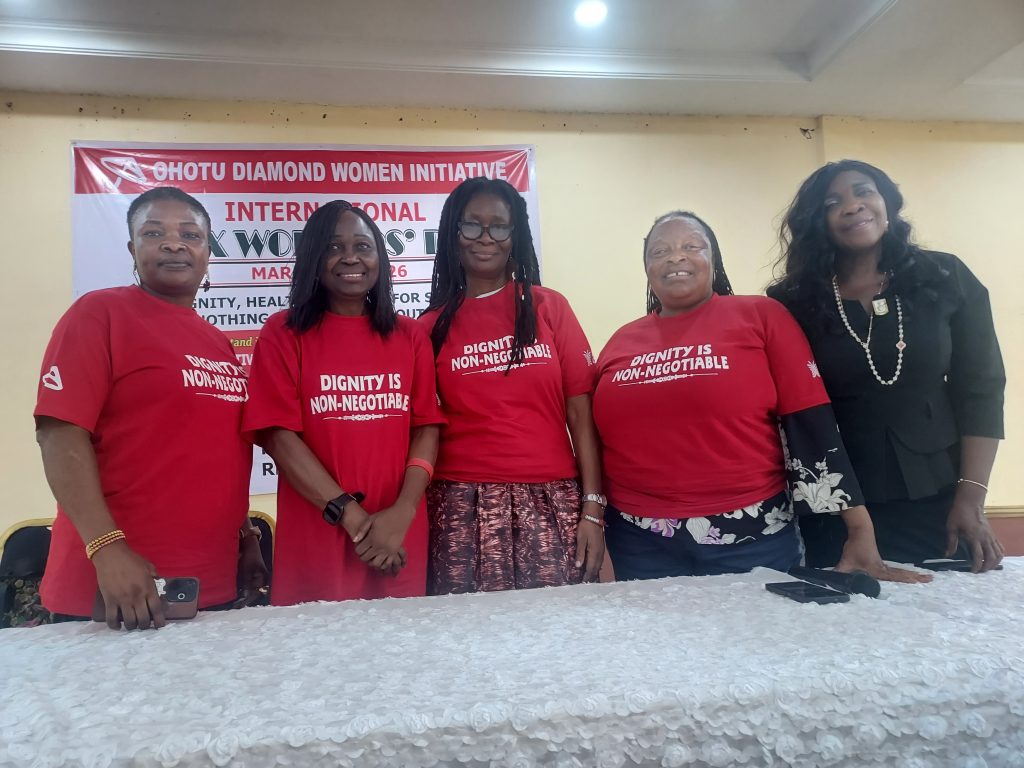
Despite advocacy efforts, Nigeria’s legal framework surrounding sex work remains complex. Ngozi Nwosu-Juba, project director at VisionSpring Initiatives, said the Criminal Code does not directly criminalise sex work itself but targets activities associated with it, such as brothel ownership or profiting from another person’s sex work. However, the Penal Code, which applies in northern Nigeria, explicitly criminalises sex work.
“These are laws made by human beings, but the reality is that there are young women who live through proceeds from sex work,” Nwosu-Juba said in an interview during the event.
She noted that authorities are aware of the existence of large numbers of sex workers across the country.
“In Ikorodu alone, there are hundreds of brothels. That means the government knows that sex workers exist in Nigeria,” she said.
Nwosu-Juba argued that the government has a responsibility to ensure access to healthcare and protection from violence for vulnerable groups. Nigeria’s international commitments, including the United Nations Sustainable Development Goals (SDGs), require governments to ensure that no one is left behind in access to services, she added.
“The government owes everyone a duty of care when it comes to healthcare,” she said.
Concerns over law enforcement
Rights advocates also raised concerns about how sex workers are treated by law enforcement authorities. Nwosu-Juba said some sex workers report extortion or harassment when arrested rather than being formally charged under existing laws.
“When sex workers are arrested, police sometimes extort them instead of following due process,” she said.
She argued that consistent enforcement of laws and proper judicial processes would reduce corruption and exploitation.
“If the law says something is an offence, then offenders should be taken to court. Extortion only perpetuates the cycle,” she said.
She also called for more employment opportunities for young people to reduce economic pressures that push some women into sex work.
“If we tell people to stop sex work but we don’t provide alternatives, it becomes very difficult,” she said.
Government representatives respond
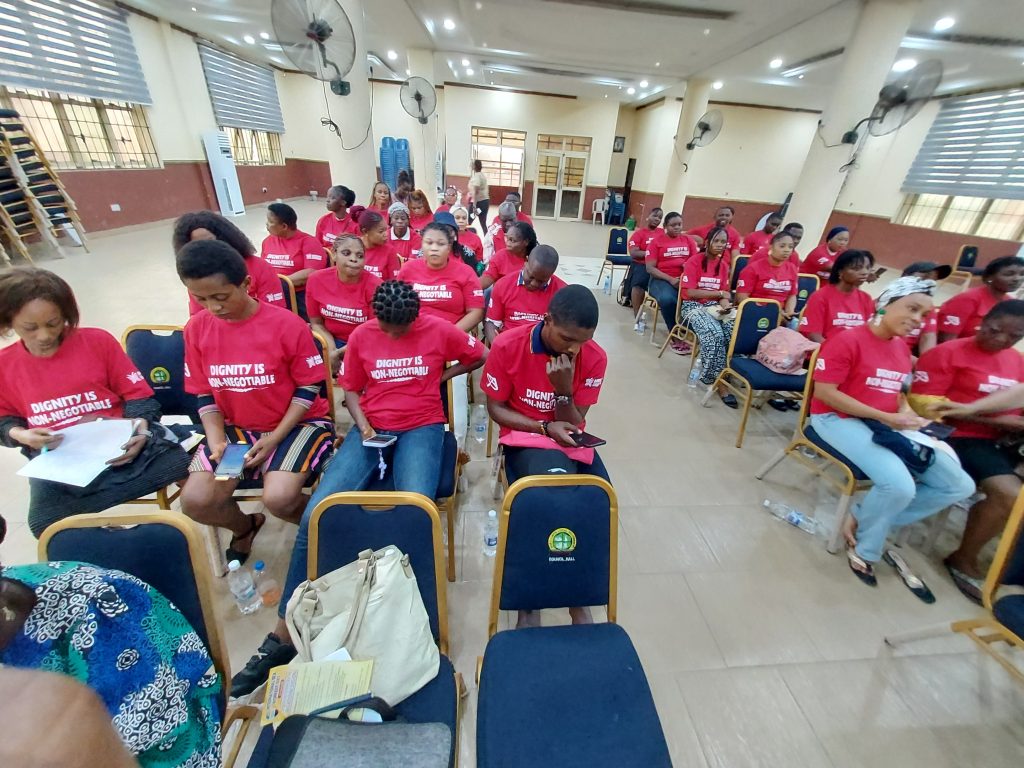
Officials from Lagos State said they are open to dialogue with advocacy groups. Abimbola Abolade, a representative of the Lagos State Ministry of Justice, said the ministry recognised the need to ensure fairness and access to justice for all women.
“We understand that we are a key stakeholder in upholding the rights of all women, including sex workers,” Abolade said.
“We are here to see how we can strengthen collaboration and make pathways that improve access to justice in Lagos State.”
Health officials also emphasised the importance of inclusive healthcare services. Kemi Ayodele, representing the Directorate of Family Health and Nutrition at the Lagos State Ministry of Health, said health should be understood as a broad concept beyond the absence of disease.
“It includes physical, psychological and social wellbeing,” she said.
“Our focus is ensuring that people can live healthy lives and function within their communities.”
A representative of the Nigeria Police acknowledged that sex work is illegal under Nigerian law but said officers still attempt to handle cases involving sex workers fairly when they are brought to police stations.
A continuing debate
The discussions at the event reflected a broader debate in Nigeria about how to balance moral concerns, legal restrictions and human rights. For advocates, the issue is less about morality and more about ensuring basic protections.
“Human rights should guide us,” Nwosu-Juba said.
“Adults have the right to choose what works for them, but government must still ensure access to healthcare, justice and protection from violence.”
As International Sex Workers’ Day concluded, organisers said they hoped the dialogue would lead to more concrete collaboration between government institutions and community-based organisations.
“Let today not end as another ceremony,” Nnang said.
“Let it mark a turning point where dignity, healthcare and justice are not selective, but available to everyone.”