
By Bunmi Yekini
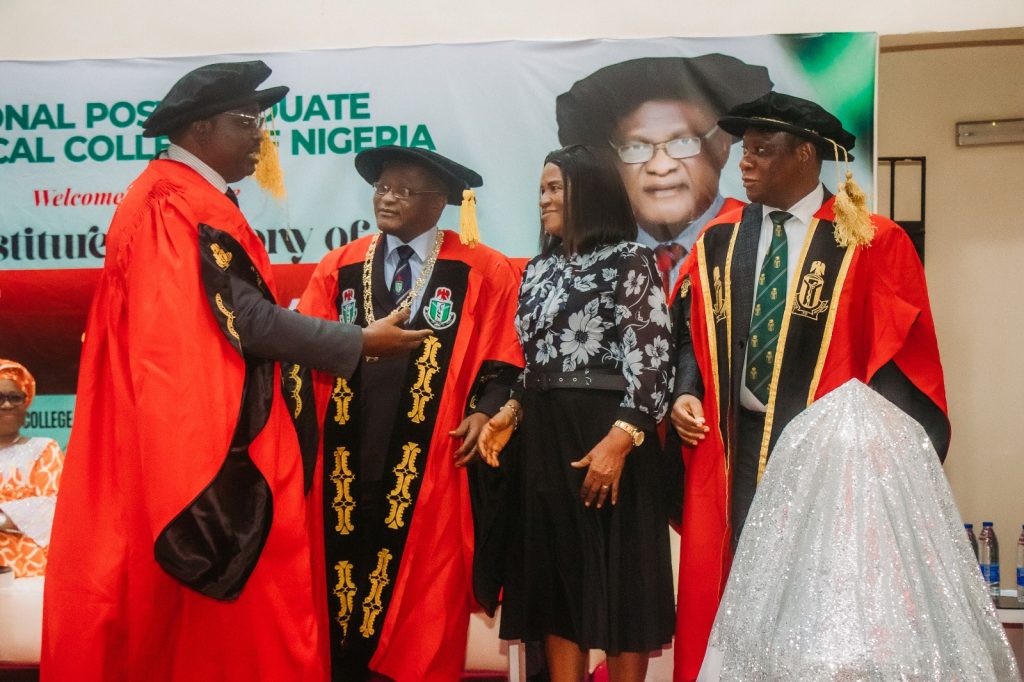
The newly installed president of the National Postgraduate Medical College of Nigeria (NPMCN), Anthony Nnaemeka Ikefuna, has unveiled an agenda aimed at modernising Nigeria’s postgraduate medical education through the expanded use of technology, improved quality assurance systems and stronger engagement with medical professionals within and outside the country.
Ikefuna, a professor of paediatrics at the University of Nigeria, was formally invested as the 24th president of the college on Friday at its campus in Ijanikin, Lagos, where he outlined a series of initiatives designed to strengthen the institution’s training capacity and global competitiveness.
Addressing fellows, resident doctors, government officials and other stakeholders at the ceremony, Ikefuna said his administration would prioritise innovation, digital learning and institutional reforms that would help the college maintain its reputation as one of the country’s leading institutions for postgraduate medical and dental education.
“Our College must continue to evolve in line with global developments in education and healthcare,” Ikefuna said in his inaugural address. “We will explore new frontiers while sustaining the standards that have made this institution a respected centre for postgraduate training.”
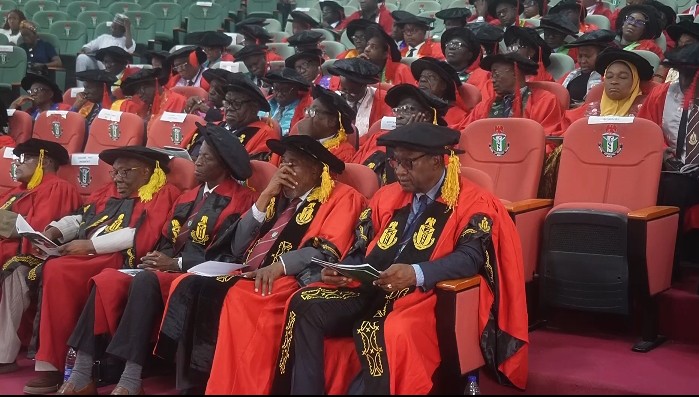
The NPMCN plays a central role in the Nigerian healthcare system, overseeing the training, examination and certification of specialists in medicine and dentistry. Fellows of the college serve as consultants, teachers and researchers in tertiary hospitals and medical schools across the country.
The ceremony marked the formal beginning of Ikefuna’s tenure, which officially commenced on Jan. 1, as the institution’s 24th president. The professor of paediatrics said his administration would work closely with the college’s Past Presidents Forum to draw on institutional experience while navigating emerging challenges in postgraduate medical education.
“The wisdom and experience of our past leaders will continue to guide the direction of the College as we address both present and anticipated challenges,” he said.
One of the key priorities outlined in the new president’s agenda is increasing awareness of the college among medical trainees and strengthening its reputation as the institution of choice for postgraduate examinations.
Also Read: Nigeria Faces Growing Doctor Shortage as Migration Abroad Accelerates
According to him, the success of Nigerian-trained specialists working in different parts of the world demonstrates the quality of training provided by the college.
“The fact that our graduates excel beyond the shores of this country attests to the quality of training offered by the College,” Ikefuna said.
He added that the institution would welcome proposals and innovations that could further strengthen its standing among global postgraduate training bodies while preserving the standards that have defined its programmes. To improve engagement with fellows and other stakeholders, Ikefuna announced plans to introduce a periodic college newsletter that will disseminate information about events, activities and developments within the institution. The newsletter will be circulated through the college’s official email system, website and professional communication platforms used by its faculties.
He said the initiative would ensure that fellows who are unable to visit the college regularly remain informed about developments and have opportunities to contribute ideas that could support institutional growth.
“This will provide a direct communication channel between the College and its fellows, allowing them to stay unified and focused on our collective goals,” Ikefuna said.
Another major initiative announced by the new president is the launch of a bimonthly online lecture series aimed at promoting continuous learning among medical professionals and strengthening the college’s academic visibility. The programme, which was approved during the college’s January retreat, will feature presentations by different faculties on emerging developments and important issues in their respective specialities.
The first lecture in the series is scheduled for March 26 and will be delivered by the Faculty of Anaesthesia. Ikefuna said the online lecture programme would promote knowledge sharing, professional development and collaboration among specialists while also raising public awareness of the college’s work.
“The lecture series will disseminate knowledge, promote professional development and ensure that we remain current with advances in medical practice,” he said.
The initiative is also expected to encourage interaction among fellows from different specialities, creating opportunities for collaboration in research, training methods and clinical practice.
“This platform will allow fellows to network and exchange ideas across specialities, thereby strengthening our training and academic culture,” Ikefuna added.
The new president said the college would implement measures aimed at strengthening its organisational structure and operational efficiency. These reforms include expanding the institution’s administrative organogram to reflect the various programmes and functions performed by the college.
According to him, restructuring the administrative framework will improve communication, clarify reporting lines and enhance coordination among different units within the institution.
“We are streamlining our channels of communication to ensure efficient administration and better organisational relationships,” he said.
The reforms will also extend to the faculties within the college, where subspecialty programmes approved by the Senate will be reorganised to function as departments headed by designated leaders. Ikefuna said this restructuring would ensure that the growing diversity of medical subspecialties is adequately represented in decision-making processes within the faculties.
“Our goal is to achieve balance, fairness and robust deliberations in faculty boards so that our decisions can better support the growth of the College,” he said.
Another key area of focus for the new administration is strengthening quality assurance in examinations and training programmes. The college has long used standard-setting methods in its examinations, and Ikefuna said these practices would continue as part of efforts to maintain internationally acceptable standards.
To further strengthen the process, the college plans to implement a quality assurance assessment tool designed to monitor examination management and evaluation procedures across faculties. The tool will help identify areas where improvements may be needed while ensuring that assessment processes remain consistent with approved standards.
“The purpose of this exercise is not to apportion blame but to evaluate how well we comply with our established assessment methods,” Ikefuna said.
He noted that effective monitoring of training and assessment processes would ultimately improve the competence of medical specialists produced by the college.
“When our training and evaluation systems are well organised and consistently applied, we will produce specialists who can deliver high-quality healthcare to the society,” he said.
To encourage compliance with these standards, the college will introduce a new award named after the late Christopher Ekundayo Famewo, a former president of the college. The Dr Christopher Ekundayo Famewo Quality Assurance Prize will be presented annually to the faculty that demonstrates the highest compliance with the college’s quality assurance benchmarks. The award, sponsored by the Faculty of Paediatrics with support from the Faculty of Anaesthesia, will include a trophy, a certificate and a cash prize of 500,000 naira. Ikefuna said the initiative would promote healthy competition among faculties while reinforcing the importance of quality assurance in postgraduate training.
The college is also exploring the introduction of a pre-fellowship PhD programme as part of efforts to expand academic opportunities for trainees and fellows. The proposal followed a consultative forum convened in December 2024 by the college’s immediate past president, which brought together fellows working in academic institutions.
Participants at the meeting reached a consensus that the college should begin preparations for the programme in collaboration with relevant regulatory authorities. Ikefuna said discussions were ongoing with the National Universities Commission to ensure that the programme aligns with national higher education standards.
Meanwhile, the college will continue to encourage research integrity by maintaining the use of the plagiarism detection platform Turnitin to screen research proposals, theses and dissertations submitted by trainees. The system compares submitted manuscripts with a large database of academic publications to identify instances of duplicated text or improper citation. Ikefuna said the use of the platform reinforces the college’s commitment to promoting originality and academic honesty in research.
He added that financially up-to-date fellows and trainers would be encouraged to make use of the facility in supervising research projects.
Another strategic priority outlined by the new president involves strengthening collaborations with other postgraduate medical institutions that share similar goals. Such partnerships, he said, would enhance the exchange of expertise, improve training methods and expose Nigerian trainees to global developments in medical practice. He noted that some faculties within the college already collaborate with counterpart institutions in specific specialities, including ophthalmology, obstetrics and gynaecology, and pathology. The college plans to encourage other faculties to develop similar partnerships.
“These collaborations will help us stay current with advancements in medical knowledge and improve our ability to address complex clinical challenges,” Ikefuna said. The president also emphasised the importance of engaging Nigerian medical professionals working abroad.
The college has developed guidelines that allow qualified specialists in the diaspora to obtain fellowship recognition and contribute to training programmes in Nigeria.
Ikefuna said more than 80 specialists applied during the maiden edition of the programme, demonstrating strong interest among diaspora professionals.
“We recognise that the College belongs to all Nigerians who meet our professional benchmarks and wish to contribute to the advancement of medical education,” he said.
He added that the participation of diaspora specialists would further strengthen the college’s reputation and training capacity. Ikefuna reaffirmed the college’s commitment to producing highly skilled medical and dental specialists capable of delivering quality healthcare services.
“The National Postgraduate Medical College of Nigeria remains the gateway to postgraduate medical training in our country,” he said. “We will continue to work together as a team to ensure that our programmes meet the highest standards and that our graduates contribute meaningfully to the health of Nigerians,” he concluded.