
Medical leaders warn worsening shortage could strain hospitals as thousands seek certificates to practise overseas
By Bunmi Yekini
Nigeria’s health sector is facing a deepening workforce crisis as thousands of doctors continue to seek opportunities abroad, senior medical leaders warned on Friday, citing growing migration among both newly qualified and experienced practitioners.
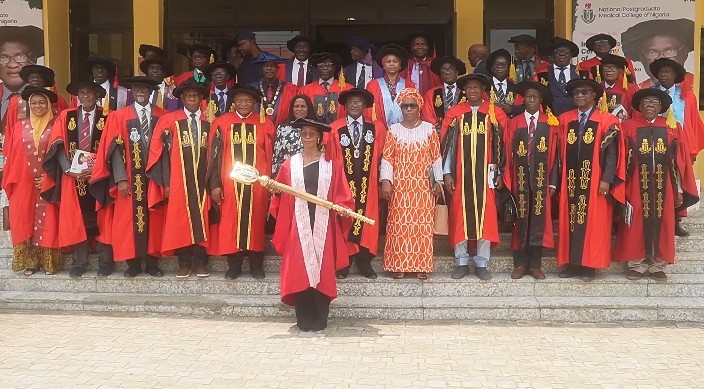
Speaking at the investiture ceremony of Professor Anthony Nnaemeka Ikefuna as the 24th president of the National Postgraduate Medical College of Nigeria in Lagos, sector leaders said the country was struggling to retain medical professionals despite producing thousands of graduates annually.
The president of the Medical and Dental Consultants Association of Nigeria (MDCAN), Professor Appolos Ndukuba, warned that the continued outflow of doctors could push the country’s health system toward a crisis if urgent measures are not taken.
“The medical sector is facing a very severe human resource for health challenge,” Ndukuba said.
According to him, hospitals across the country are increasingly finding it difficult to recruit and retain doctors, even when vacancies are advertised.
“When hospitals call for employment, people are not coming to take it up,” he said. “Even the people that come, before you look for them in six months or a year, they are no longer there.”
Nigeria trains thousands of doctors every year through its universities and postgraduate medical institutions, but many leave the country shortly after qualifying, seeking better working conditions, career prospects and remuneration abroad.
Ndukuba said the country was effectively producing skilled professionals for other countries while grappling with shortages at home.
“It is just like pouring water into a basket,” he said. “As far as the basket is leaking, no matter how much water you pour into it, you cannot retain it.”
The exodus, he said, involves both younger and older doctors, further compounding the strain on the healthcare system.
“What is happening now is that not only are the new graduates leaving, but even the older ones are also leaving,” he said, citing migration, retirement and death as factors reducing the number of experienced practitioners available in the country.
The departure of doctors has increased the workload on those who remain, he said, often leading to fatigue, burnout and declining morale among healthcare workers.
“Even those who remain have lost interest because the burden of work is on them,” Ndukuba added.
Data presented by the registrar of the Medical and Dental Council of Nigeria (MDCN), Professor Fatima Kyari, illustrated the scale of the migration trend. Kyari said that in 2024 about 4,900 newly registered medical doctors and dental surgeons entered the Nigerian workforce. However, about 4,200 applications were submitted for certificates of good standing, a document required by doctors seeking to practise abroad.
Such certificates are often requested by foreign regulatory authorities as proof that the doctor is licensed and in good professional standing in their home country.
“About 66% of those requests were for the United Kingdom,” Kyari said.
While some applications are made for short-term training or academic purposes, the figures are widely viewed by regulators as a key indicator of the number of doctors considering relocation. Nigeria has experienced a steady outflow of medical professionals over the past decade as developed countries seek skilled healthcare workers to address their own shortages.
The migration trend has raised concerns among policymakers and medical leaders who fear that Nigeria may not have enough doctors to meet the needs of its rapidly growing population if the pattern continues. Kyari acknowledged that both newly qualified and experienced doctors were leaving the country.
“It is not only the newly qualified doctors who are leaving,” she said. “Even the older doctors are leaving.”
In response to the growing demand for medical professionals, the council has taken steps to increase the number of students admitted into medical and dental programmes across the country.
According to Kyari, the intake capacity of colleges of medicine has been expanded significantly in recent years.
“In 2023, the intake capacity for medical and dental students was about 5,700,” she said. “By 2025, because of improved resources, the intake capacity has increased to about 9,100.”
The expansion forms part of broader efforts under the Nigeria Health Sector Renewal Investment Initiative aimed at strengthening the country’s health system.
However, Kyari said increasing the number of medical graduates alone may not fully resolve the problem of doctor migration.
“We know expansion may not solve the problem,” she said, noting that Nigeria continues to experience high demand for healthcare services due to its large and youthful population.
At the same time, she said there were indications that some Nigerian doctors in the diaspora remain interested in maintaining ties with the country’s medical system.
According to her, a growing number of doctors practising abroad have updated their registration with the council in order to return periodically to provide services or training.
“Some have come back permanently, and some come back intermittently to provide expert services,” Kyari said.
Despite the migration trend, she said Nigerian-trained doctors continue to perform strongly wherever they practise.
“Our doctors are well grounded, well trained and resilient, and they excel wherever they go,” she said.
Medical leaders at the event stressed that improving doctors’ welfare and working conditions could help slow the outflow of professionals.
Udokoba said the causes of migration go beyond salaries and include broader issues affecting doctors’ quality of life.
“We need to look deeply at the push and pull factors,” he said.
He recalled that in earlier years, newly qualified doctors could access welfare benefits such as loans that improved their living conditions.
“Someone mentioned that when he was a house officer, he was able to get a car loan and buy a brand-new car,” Udokoba said. “These days, the reverse is the case.”
Improving welfare packages, housing support and professional development opportunities could help make the profession more attractive within the country, he said.
At the same time, he acknowledged that it is difficult to stop individuals from seeking better opportunities elsewhere.
“It is difficult to tell somebody not to go where he thinks things will be better,” he said.
Ndukuba, however, praised doctors who continue to practise in Nigeria despite the challenges.
“Any doctor who is still practising in this country at this moment is patriotic,” he said.
Medical leaders said addressing the workforce shortage will require coordinated action from government, professional associations and training institutions to ensure that the country can retain enough specialists to meet the healthcare needs of its population.