
State data show 17.3% of under-fives are stunted, while a separate 2022 survey puts the figure at 39.4%; government plans dedicated funding, grassroots interventions and stronger monitoring to tackle malnutrition.
By Bunmi Yekini
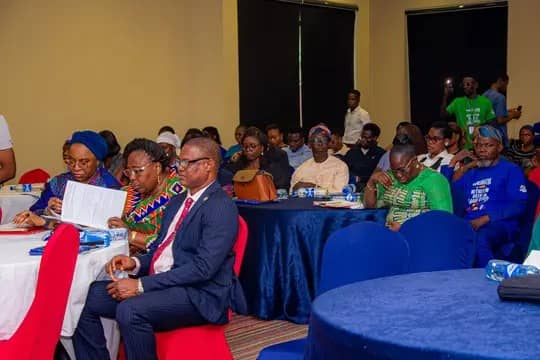
Lagos State is seeking to strengthen nutrition financing and expand community-based interventions as data reveal persistent malnutrition among children, poor dietary diversity and maternal anaemia, raising concerns about the long-term impact on the state’s human capital and productivity.
Despite being Nigeria’s commercial hub, Lagos continues to grapple with significant nutritional challenges, including stunting, wasting, underweight children and micronutrient deficiencies, according to data presented by the state Ministry of Health.
The ministry’s nutrition situation report, presented by State Nutrition Officer Fadairo Taiwo Adejoke during the 2026 Nutrition Week, showed that 17.3% of children under five in Lagos were stunted, 6% were wasted and 14.3% were underweight, based on the 2023 Nigeria Demographic and Health Survey (NDHS).
A separate Lagos State Reproductive and Child Health Indicator Survey (LARCHIS) conducted in 2022 recorded considerably higher figures, putting stunting at 39.4%, wasting at 15.8% and underweight at 23.3%.
The two surveys use different reference periods and should not be interpreted as evidence of a direct improvement or deterioration in the state’s nutrition situation.
Stunting, which results from prolonged inadequate nutrition and recurrent infections, is particularly concerning because its effects on physical growth and cognitive development can be difficult to reverse after the first two years of life.
Samuel Akinyode, Lagos State Coordinator of Civil Society Scaling Up Nutrition in Nigeria (CS-SUNN), said the 39.4% stunting figure from the LARCHIS survey underscored the urgency of prioritising nutrition interventions.
He said the first 1,000 days of a child’s life, from conception until the second birthday, represented a critical window for preventing irreversible developmental damage.
“Once you miss it out in this first 1,000 days of life, you have missed out that child from becoming a nourished child,” Akinyode said.
He said addressing stunting did not mean neglecting wasting and underweight, adding that Lagos had established a multisectoral coordination structure involving 13 government ministries, departments and agencies that meet quarterly to review nutrition interventions.
The Ministry of Health’s presentation identified inadequate nutrition knowledge, poor access to affordable nutritious food, cultural misconceptions and insufficient financing at state, local government and community levels as major obstacles to improving nutrition outcomes.
Maternal nutrition also remains a concern. Data from the 2018 Nigeria National Nutrition and Health Survey (NNHS), included in the state presentation, showed that 49.5% of women of reproductive age in Lagos were anaemic, while 6.5% were classified as thin, with a body mass index below 18.5.
The figures highlight the relationship between maternal health and childhood nutrition, particularly as inadequate nutrition during pregnancy can affect foetal development and contribute to poor health outcomes after birth.
Oluwaseun Afolake Ajibade, Vice Chairperson of the Nutrition Society of Nigeria, Lagos State Chapter, said malnutrition was not limited to visibly underweight children, warning that micronutrient deficiencies, often described as hidden hunger, could go undetected without proper screening.
She said nutrition professionals regularly encountered mothers relying on inaccurate information about food combinations and feeding practices, sometimes sourced from social media.
Ajibade cited the case of a mother who was feeding her six-month-old child a blended mixture of oats and unripe plantain because she had been advised that the combination contained nutrients needed for the child’s development.
The mother was reportedly force-feeding the child when the food was rejected.
“People don’t need to have a whole lot of money before they can eat well. We have our tubers, our legumes, our cereals and different things that we can combine together,” Ajibade said.
She said nutrition education, food demonstrations and guidance on locally available and seasonal produce were necessary to help households improve dietary quality without relying on expensive imported foods.
Financing gaps and government response
The Lagos State Government says it is strengthening budgetary coordination and funding arrangements to address the problem, although officials have not disclosed a specific increase in the amount allocated to nutrition in the 2026 budget.
Olayinka Modupe Ojo, Permanent Secretary of the Ministry of Economic Planning and Budget, said the government had begun tracking nutrition-related expenditure across ministries and agencies to establish how much was allocated and actually spent on interventions.
She said the exercise would help the government identify funding gaps and assess whether agencies were increasing their allocations in subsequent budgets.
“We have decided to provision also to have a back-end domiciled fund to support nutritional value programmes,” Ojo said, adding that the proposed support would focus particularly on primary healthcare delivery.
The state has more than 300 primary healthcare facilities and is working towards expanding round-the-clock services to 100 of them, she said.
Ojo said nutrition focal persons had been appointed across relevant ministries and agencies, with local government representatives coordinating interventions at the grassroots.
The coordination framework also involves development partners and civil society organisations, with quarterly meetings designed to improve accountability and ensure nutrition programmes are incorporated into government planning.
The State Nutrition Officer said the government had also secured commodities under the Child Nutrition Fund, approved in 2025, with supplies recently arriving through the United Nations Children’s Fund (UNICEF).
The commodities are expected to support interventions extending into 2027, while further proposals will be developed for subsequent releases.
Adejoke said nutrition-related budget lines existed across several ministries and agencies, including Health, Education, the Primary Healthcare Board, Youth and Social Development, enabling them to access funds for programme implementation.
She said the state was also pursuing food affordability measures through government-supported food hubs, designated markets, fisheries and agricultural initiatives, including the Eko Rice programme implemented in collaboration with Kebbi State.
However, she acknowledged that rising population and daily migration into Lagos made it difficult to maintain programme coverage and reach intended beneficiaries.
“The state is doing a lot. But even with that, you will need to restructure and do everything in capacity to ensure that you still meet up with your target,” she said.
Feeding practices reveal further challenges
Beyond funding and food availability, feeding practices among infants and young children remain a significant concern.
The Ministry of Health’s presentation showed that exclusive breastfeeding among infants in Lagos stood at 57.4% in the 2021 Multiple Indicator Cluster Survey (MICS 6), compared with 72.3% in the 2022 LARCHIS survey.
The same presentation showed that breastfeeding within the first hour of birth was 14% in MICS 6, while breastfeeding among children up to 12 months stood at 79.8% in MICS 6 and 67.5% in LARCHIS.
Complementary feeding indicators also revealed gaps in children’s diets.
Minimum dietary diversity improved from 46.2% in the 2017 MICS 5 survey to 58.8% in MICS 6 in 2021.
However, the proportion of children receiving a minimum acceptable diet rose only slightly, from 16.2% to 18%, while minimum meal frequency declined from 43.2% to 40% over the same period.
The figures suggest that although more children are consuming a wider variety of food groups, a substantial proportion are still not receiving diets that meet minimum nutritional requirements.
Adejoke said the government was implementing interventions including vitamin A supplementation, deworming, malnutrition screening and the distribution of ready-to-use therapeutic food and other nutritional commodities.
Pregnant women are also being targeted with multiple micronutrient supplements to prevent anaemia, with the state recommending continued use after delivery.
Ajibade said nutrition education needed to begin during pregnancy and continue through infancy and early childhood to prevent the cycle of malnutrition from being passed between generations.
Schools and grassroots communities become critical
The state government is also looking towards schools and local communities to improve nutrition awareness and encourage healthier eating habits.
Abisola Dokumu Adebisi, Permanent Secretary of the Ministry of Basic and Secondary Education, said poor nutrition could undermine children’s cognitive, psychological and physical development, affecting their performance in school.
She said her ministry was working with other government agencies to incorporate nutrition education into school activities and encourage practical food production.
“We have farms in almost all our schools, and these farms are cultivated by the students themselves,” Adebisi said.
She said the initiative helped children understand food production, reduce waste and appreciate the nutritional value of locally available produce.
The ministry also plans to disseminate nutrition information in Yoruba and Pidgin English to reach communities where English may not be the most effective means of communication.
Adebisi said collaboration with local governments and the Primary Health Care Board would help extend nutrition education beyond schools to households and vulnerable communities.
The Nutrition Society of Nigeria is similarly seeking stronger partnerships with the government to expand community-based food demonstrations and nutrition assessments.
N774 initiative seeks accountability at grassroots
The financing challenge is also being addressed through the national Nutrition 774 initiative, which seeks to make nutrition planning and accountability part of governance across Nigeria’s 774 local government areas.
A presentation by Dr Adekitan Adetoke, Nutrition Programme Manager at the Lagos State Primary Health Care Board, described the initiative as a national coordination framework linking federal policies, state institutions, local government administration and community-level interventions.
Rather than operating as a direct service delivery programme, N774 is designed to align existing government structures around five strategic pillars: decentralised coordination, data and accountability, sustainable financing, nutrition prioritisation and service delivery.
The framework also proposes six instruments to strengthen implementation, including costed local government multisectoral action plans, a Presidential Nutrition Investment Fund, a national nutrition data system, community advocacy and dedicated financing mechanisms.
Figures presented in the document showed that 470 of Nigeria’s 774 local government areas, representing 61%, had established Local Government Committees on Food and Nutrition.
Nine states had inaugurated State Councils on Nutrition, while nutrition budget tagging had become operational in more than 14 states.
The initiative also seeks to introduce quarterly performance monitoring of local governments to measure progress in implementing nutrition policies and interventions.
Akinyode said Lagos had extended its Local Government Committees on Food and Nutrition beyond the state’s 20 local government areas to cover its 37 local council development areas, bringing the total to 57 committees.
He said the arrangement would help ensure that nutrition interventions reached communities and that local authorities took greater responsibility for the health of women and children.
The N774 presentation stressed that establishing committees alone would not guarantee results without adequate funding, implementation plans and accountability.
Its proposed financing-to-outcomes framework links dedicated funding, including the Presidential Nutrition Investment Fund and Child Nutrition Fund, to costed local government action plans and measurable improvements in nutrition indicators.
Economic consequences extend beyond healthcare
For Lagos, the implications of malnutrition go beyond childhood illness and healthcare expenditure.
Poor nutrition can affect educational attainment, productivity and the ability of individuals to contribute to economic development, making it a human capital concern for a state seeking to sustain its economic growth.
The Ministry of Economic Planning and Budget said nutrition considerations were increasingly being incorporated into development planning and budgetary processes, while the state government was also engaging stakeholders across agriculture, education, health, finance and social development.
In her welcome address, delivered by Director of Economic Planning Olaoluwa Bakare, Ojo said access to safe, affordable and nutritious food was essential to building a productive and resilient population.
She said food security required attention across the entire value chain, from production and processing to distribution, affordability and consumption.
But nutrition advocates say the effectiveness of these commitments will ultimately depend on whether funding reaches communities, households can afford diverse diets and interventions produce measurable improvements.
Akinyode said Nigeria had expanded its commitment to nutrition, noting that the number of states with six months of paid maternity leave had increased from about four three years ago to 21 in 2026.
He also cited the federal government’s National Community Foodbank Project as another intervention aimed at supporting vulnerable households.
For Lagos, the challenge remains translating these initiatives into sustained reductions in stunting, wasting and underweight among children, while improving maternal nutrition and infant feeding practices.
The state’s own nutrition data show that the scale of the problem requires more than awareness campaigns. It will require consistent financing, reliable monitoring, affordable nutritious food and interventions that reach families during the earliest stages of a child’s development.