
Advocates say excluding boys breeds stigma and shame, call for early, family-level engagement
By Bunmi Yekini
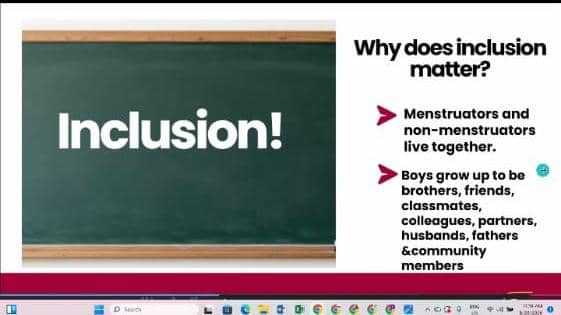
Health advocates in Nigeria and India have urged parents, schools and policymakers to deliberately bring boys and young men into menstrual health conversations, arguing that lasting change toward a more informed and supportive society must start with boys learning about menstruation from an early age.
The appeal came during a joint India-Nigeria webinar on Friday titled “Including Boys in Menstrual Health Conversations: The Indian-Nigerian Conversation,” organized by the Sanitary Pad Media Campaign (SPMC). The session drew public health professionals, educators, psychologists and advocates from both countries to discuss the fallout from leaving boys out of menstrual health education.
Dr. Vera Ngozi Osokoya, editor-in-chief of Pioneer Progressive Herald Magazine in France and special guest of honour at the event, called the topic a critical one, saying that sidelining boys from such discussions fuels ignorance and shame.
SPMC convener Anikeade Funke-Treasure framed menstrual health as a matter for the whole family rather than girls alone, arguing that change has to be built from individuals and households upward before it can reach institutions and policymakers. She said family well-being suffers when menstrual health is not properly addressed.
Indian public health researcher Dr. Sagarika Limaye said keeping boys out of the room during menstrual health sessions sends an unintended message that periods are something to conceal, leaving both girls and boys worse off. She noted that boys and girls do not grow up in separate worlds, they become brothers, classmates, colleagues and partners to one another.
Funmi Olorunmola, programme coordinator at the Citizens Participation Advancement and Awareness Initiative, said educating men and boys can turn them from gatekeepers into allies in the fight against period poverty. She added that a girl’s dignity depends partly on how the men around her respond to her, not just on what she herself knows.
Counsellor and psychologist Samiran Ghodmare, also from India, said rigid expectations placed on boys often leave them unprepared to engage with menstrual health issues, and called for a more deliberate, inclusive approach.
The discussion, moderated by SPMC communications manager Bolanle Oluwayemi, centred on engaging boys early with age-appropriate information, building safe spaces for such conversations at home and in schools, and tackling stigma and misinformation. Participants agreed that the attitudes boys form in childhood shape how they later relate to menstruators as partners, fathers, colleagues and leaders.
SPMC called on parents, educators, media organizations and community leaders to make boys’ inclusion in menstrual health education a deliberate practice rather than an afterthought.
Friday’s session was the second in a series of virtual conversations SPMC has held in the past year, following an earlier webinar focused on building confidence among girls.