
A two-day high-level forum draws police, ministries of justice, and civil society groups to tackle organised entrapment, blackmail, and the near-total collapse of reporting systems for marginalised persons
By Bunmi Yekini
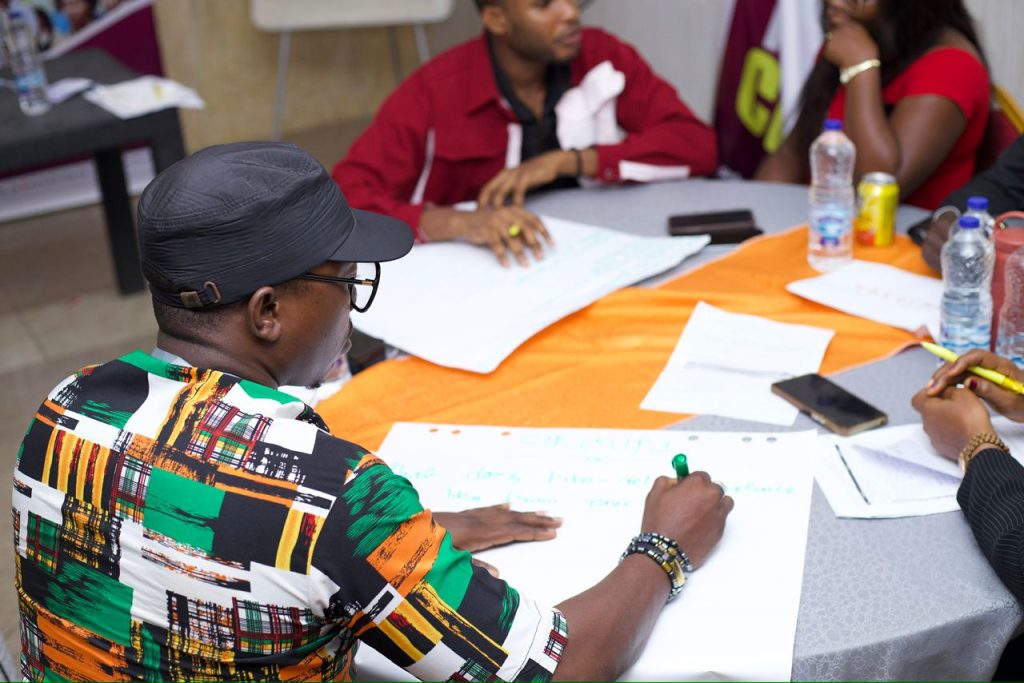
The numbers were alarming enough to silence a room full of lawyers, police officers, and human rights commissioners. In Lagos alone, over 95 percent of surveyed respondents reported experiencing some form of kito-related violence within the year. In Osun State, the figure hovered above 85 percent. Across all six South-West states, fewer than three in ten survivors ever reported what happened to them.
It was against this backdrop that the Improved Sexual Health and Rights Advocacy Initiative (ISHRAI), with support from Amplify Change, convened a two-day High-Level Consultative Forum in Lagos, bringing together an unusually broad coalition of stakeholders, the Nigeria Police Force, Ministries of Justice, the National Human Rights Commission (NHRC), legal practitioners, civil society organisations, and community actors from Lagos, Ogun, Oyo, Ondo, Ekiti, and Osun States, to confront what organisers described as a growing but largely invisible public safety crisis.
Kito violence, a term used to describe the organised entrapment, extortion, blackmail, assault, and psychological abuse of persons with diverse sexual and gender identities, has long operated in the shadows, sustained by stigma, fear, and the near-total absence of functional reporting pathways. The forum was convened to drag it into the light.
“The programme is a two-day consultative forum where stakeholders are here to deliberate on human rights issues affecting marginalised persons,” said Sophia Lawal, Programmes Manager at ISHRAI, who helped coordinate the event. “At the end of the meeting, we hope to have a communiqué where these stakeholders, from the Human Rights Commission and beyond, are able to give a commitment to ensure that this violence is actually prioritised and addressed.”
The findings presented from ISHRAI’s baseline and mapping surveys, drawn from 240 respondents across the six states, 40 per state, painted a picture of a protection system in crisis. Beyond the high violation rates, 67.9 percent of respondents said they feel unsafe meeting new contacts, and 89.2 percent identified inadequate protection and low confidence in institutional response as core concerns. Perhaps most telling, 93 percent agreed that silence, stigma, and fear are the primary drivers of underreporting.
Martin Chukwudera Anumene, Project Coordinator at ISHRAI Lagos, explained the critical distinction between awareness and safety that the data revealed. “In Lagos, there is increased awareness of community services available to marginalised persons, almost 85 percent awareness of services,” he noted. “But there is still very low trust in law enforcement.” In Osun State, by contrast, the problem runs deeper still: not only is trust in institutions low, but fewer than 15 percent of respondents were even aware that support services existed.
“If I’m a survivor of kito violence, I know where to go to get help in Lagos, I can come to ISHRAI, I can go to TIERS, I can go to other civil society organisations,” Anumene explained. “But in somewhere like Osun State or Oyo State, there is next to zero awareness of such organisations for people of marginalised identities.”
The forum’s plenary discussions and institutional working groups identified a cascade of systemic failures: weak inter-agency collaboration, inadequate referral pathways, poor documentation processes, and the near-complete absence of survivor-centred protection mechanisms. For Barrister Josephine Ijkhuemen, Chairperson of the ISHRAI Board, the two days of dialogue revealed how far existing legal protections remain from the people they are designed to shield.
“The law has made provisions to protect marginalised groups, the Violence Against Persons Act, the Anti-Torture Act, the African Charter,” she said. “They are all there. The problem we are having is that victims may not know their rights. The police may not even know that these laws go as far as protecting these marginalised vulnerable groups.” She added a further complication: “In certain cases, marginalised vulnerable groups may self-stigmatise because they are afraid of being further prosecuted when they are trying to run to the law for protection.”
A moment that drew particular reflection came when a police officer among the participants acknowledged, during open discussion, that the forum had deepened her understanding of how these criminal acts operate. For Barrister Ijkhuemen, it was the forum’s most telling moment. “An informed person will go forward to inform others, which will go forward to protect those marginalised vulnerable groups which we seek to protect,” she said.
By the close of the second day, participants jointly adopted a communiqué outlining concrete commitments: stronger inter-agency cooperation, improved access to justice mechanisms, survivor-centred reporting and referral systems, digital safety education, enhanced public sensitisation, and sustained multi-sector engagement.
The forum forms part of ISHRAI’s ongoing 18-month intervention under the project “Securing Our Lives: Combating Kito Violence and Advancing Safety and Justice in South-West Nigeria”, a programme whose urgency, the data suggests, could not be more pressing.
“The victims need to actually get justice.” Lawal concluded.