
CS-SUNN says local government nutrition committees and budget lines are needed to turn policies into action and curb child malnutrition
By Bunmi Yekini
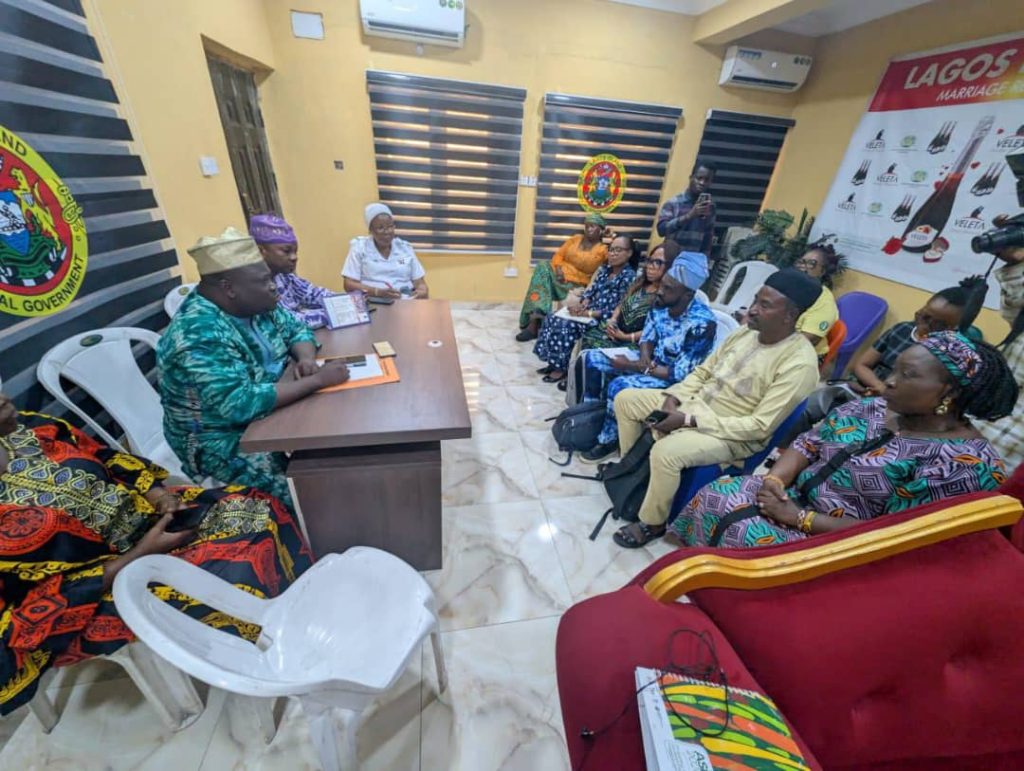
Nigeria’s battle against child malnutrition is shifting to the local government level, where civil society advocates are pushing councils to create dedicated budget lines for nutrition and turn policy commitments into programmes that can be measured.
At Lagos Island Local Government, the Civil Society Scaling Up Nutrition in Nigeria (CS-SUNN) is asking officials to strengthen the Local Government Committee on Food and Nutrition (LGCFN), hold quarterly meetings and ensure that nutrition is reflected in the budgets of departments ranging from health and agriculture to education, information, environment and women affairs.
The push comes against a backdrop of persistent child malnutrition in Nigeria. CS-SUNN Senior Programme Manager Kunle Ishola said about 40% of Nigerian children under five are stunted, a condition associated with impaired physical and cognitive development.
“Stunting is when a child is too short for his or her age,” Ishola told Lagos Island officials during an advocacy visit. “Beyond the shortness, there is something very serious to us, when a child is stunted it affects their brain at that age.”
For advocates, the concern is not simply whether government has food programmes, but whether nutrition is treated as a cross-cutting development issue with money, planning and accountability attached to it.
Nigeria’s nutrition system has evolved from placing responsibility largely within agriculture and health to a multi-sectoral approach coordinated through planning structures, Ishola said. The same model is now being pushed down to local governments, where services and interventions reach communities directly.
“The local government committee on food and nutrition is the highest governing body for nutrition intervention at the local governments,” Ishola said, urging Lagos Island to use the committee to bring relevant departments together.
The committee is expected to include officials responsible for planning and budgeting, agriculture, environment, primary healthcare, information, education and women affairs, as well as civil society organisations, community groups, development partners and the private sector.
That structure matters because food availability does not automatically translate into good nutrition, Ishola said.
A household may have enough food, but poor dietary choices, inadequate breastfeeding practices, unsafe water or insufficient knowledge can still leave children malnourished.
That is why advocates want nutrition spending to extend beyond the health and agriculture departments.
The information department, for example, can support nutrition education through radio programmes, jingles and community activities, while agriculture officials can look at the nutritional value of food throughout the production and supply chain.
The water, sanitation and hygiene sector also has a role because illness and poor sanitation can contribute to the loss of nutrients, Ishola said.
At Lagos Island, officials said some of the building blocks were already in place.
The education department, for example, has been providing meals to pupils twice a week, including fruit before the main meal, partly to improve nutrition and encourage school attendance, said Dr Shakirudeen Idowu Lawal, head of education.
Health officials said they initiate breastfeeding soon after birth, promote six months of exclusive breastfeeding and screen children for malnutrition during child welfare clinics.
The local health team also provides counselling to mothers, conducts food demonstrations where funding allows and uses community volunteers to identify and track malnourished children.
But funding remains a constraint.
Mrs Cecilia Rhodes, the local government’s nutrition focal person, said food demonstration clinics had been held regularly but could not always continue because of financial challenges.
The problem illustrates the gap CS-SUNN wants councils to address through dedicated budget lines.
“If there’s no line, that structure will be shaky,” Ishola said, arguing that each relevant department should have a clearly identifiable allocation for nutrition.
The organisation’s experience at state level, he said, showed that government ownership could eventually reduce dependence on external support.
In Bauchi State, CS-SUNN recently supported the establishment of nutrition committees in four local governments. Two months after inauguration and training, the councils held their first meetings and began incorporating nutrition into departmental plans for the 2027 budget cycle.
At the state level, CS-SUNN has also assisted with annual operational planning and said nutrition has been incorporated into the plans of relevant Lagos state ministries and departments.
For Lagos Island, the next test is whether the advocacy translates into a costed plan that officials can implement and potential partners can support.
“Most organisations … work with evidence,” Ishola said. “If there is no plan that is costed, what will you show them?”
Mr Sodangi Adams Chido, a representative of the CS-SUNN steering committee, said Lagos Island could also use its stronger revenue base to demonstrate what local governments can do when nutrition becomes a budget priority.
He pointed to Bauchi, where local governments contributed funds towards the purchase of ready-to-use therapeutic food and other nutrition commodities.
Lagos Island officials said they were willing to explore ways to strengthen the programme.
The head of budget, Mrs Aderonke Fagbemi, said the council already collects data on children and wanted guidance on how it could work with CS-SUNN to identify and reduce stunting.
Agriculture official Hassan Saka said the council chairman had personally taken charge of the local nutrition committee rather than delegate the chairmanship, describing it as evidence of political interest in the issue.
The council also runs periodic food-distribution programmes targeting vulnerable residents, Saka said.
But advocates argue that such interventions, while useful, need to sit within a broader and measurable nutrition strategy.
For mothers and children, some of the most important interventions may also cost little compared with the long-term consequences of malnutrition.
Exclusive breastfeeding for the first six months is one example. Ishola also highlighted colostrum, the first breast milk produced after childbirth, which he said should not be discarded because it provides important nutrients and immune protection.
The challenge is reaching women who deliver outside formal health facilities and may not receive accurate information.
That makes the local government’s role broader than simply providing food.
It involves health workers counselling mothers, schools educating children, information officers taking messages into communities, agriculture officials considering nutrition alongside food production and budget officers ensuring that those plans have funding.
CS-SUNN says the ultimate goal is to make nutrition part of the routine business of local government rather than an occasional intervention dependent on external projects.
“If we have line items that speak to nutrition in our various departments, and we have been doing something, and there are things that we may not be able to do, a funder can just come and say, ‘Do you have a costed plan?’” Ishola said.
For Lagos Island, the immediate task is therefore not simply to form another committee. It is to make the committee functional, give it a work plan, attach costs to that plan and ensure that the money required to implement it appears in the council’s budget.
That, CS-SUNN argues, is how a national nutrition policy can move from government documents to the kitchens, classrooms, clinics and communities where children’s health is ultimately determined.